Showing posts with label Trauma. Show all posts

Friday, March 15, 2024

Who Am I?


Information overload. There is so much overlap between all of the following human characteristics I've been discovering about myself. In observing all these birds, I wonder if any of them wonder who they are. Are any of them comparing themselves with the others? Do any of them feel lost and alone even though they are in community with the others?

I felt overwhelmed with a flare of CPTSD (Complex PTSD) which I can at least understand after reading Pete Walker’s book with the same title and participating in online group meetings.

Add the characteristics of Myers-Briggs INFJ that I identify with: Introverted, iNtuitive, Feeling, and Judging.

I found a good video about INFJs that explains why I struggle to connect with others which eased my mind. I got the following by clicking on the transcript for the video.

INFJs often face challenges due to their yearning for meaningful connections. Unlike those who are satisfied with small talk, INFJs crave conversations and relationships that go beyond the surface level. This innate desire for depth shapes how they navigate the complexities of connections. This can sometimes make them feel isolated because not many people truly comprehend the profoundness of their thoughts and emotions. The real challenge lies in finding individuals who can reciprocate this understanding and value. INFJs may find themselves outgrowing relationships that no longer align with their values or contribute to their well-being.

https://youtu.be/GV1ljIZccSI?si=nQi_Y9GrED6Tofn9

I found two Facebook groups for INFJs where I’ve been learning more about our challenges.

Add HSP (Highly Sensitive Person).

Highly Sensitive Person, or HSP, is a term coined by psychologist Elaine Aron. According to Aron’s theory, HSPs are a subset of the population who are high in a personality trait known as sensory-processing sensitivity, or SPS. Those with high levels of SPS display increased emotional sensitivity, stronger reactivity to both external and internal stimuli—pain, hunger, light, and noise—and a complex inner life.

https://www.psychologytoday.com/us/basics/highly-sensitive-person

I also found Empaths Empowered, a blog by Diane Kathrine

https://theknowing1.com/

and Introvert Dear, a blog by Jenn Granneman

https://introvertdear.com/

Definitely: a complex inner life. As I wrote in Wrong Planet, I am complex and complicated, fractured and duplicated.

Add: Heyoka Empath – which I wrote about in the previous book, My Quest for Healing.

What a combination! How can I expect someone else to understand me if I can’t understand myself?

I do remember reading somewhere that it is normal for a person to go through different stages in life and not remember previous stages.

INFJ, Introvert, Heyoka Empath, HSP, codependent, grief, plus childhood and adult trauma (CPTSD)... the kitchen sink soup of characteristics that make up this human.

Me to Spirit: How can I obtain peace?

Spirit’s answer: Trust me. Life is not worth living without contrast and challenges.

Part of me is fine, part of me is not. I suppose I only know fine because I have the opposite to compare it to.

I am still searching for aspects of myself I buried over my lifetime.

With synchronicity, I began to read The SOUL of DESIRE. Curt Thompson, MD, wrote:
... underneath all our longings is the desire to be known.

In Chapter 4, Trauma and Shame, he wrote: 
We are a people of grief. In the presence of our desire to be known in order to co-create and become beauty with God and others, we often encounter instead a depth of grief and brokenness  that can make the hope of new creation seem like a cruel joke. It doesn't take a psychiatrist to tell us that grief is the painful emotion we experience in the face of losing something or someone to which we have meaningful attachment. It is no surprise, given the significance of our attachment and social engagement systems, that it will be painful to lose something that provides us with a sense of being seen, soothed, safe, and secure. But knowing this face doesn't make the reality of our loss any easier. // For all our desire, what we often experience is grief resulting from unmet longing. We grieve the loss of things we have had and sometimes the loss of things before we have even had them.

He also wrote about the importance of sharing our stories in group settings... which I began to do by discovering and participating in all the online support groups I've found on CoDA.org, intherooms.com, and uspainfoundation.org... which led to getting into a writing mode once again after a dry spell.

Saturday, January 7, 2023

One of Me

 \

Image from https://pasterski.com/2018/10/internal-family-systems-meet-your-inner-family/

This is a continuation of what I began writing about years ago after reading and listening to Richard Schwartz Ph.D. No Bad Parts aka Internal Family Systems. I liked learning that no matter how many parts of me there are, none of them are bad… not even the angry, judgemental ones. I have to get to know who they are and love them instead of doing what I have always done… push them away. I have also learned that everyone has parts.

To refresh your memory (and mine), I fell into a depressive episode for about six months when I got sick in June resulting in three weeks of isolation while I holed up in my bedroom in bed. Multiple voices in my head surfaced, competing for my attention at the same time. Some of these voices were angry, sad, lonely, and scared. I learned from that experience that I needed a bench sofa I could rest and nap on in my living room and only use the bedroom at night. I found one that works on Amazon.

At the end of 2006, I had moved to Texas and then got stuck here on my own. Abandonment issues magnified, and it took over five years to find a home, people, and groups I was comfortable being involved with. Holidays are the worst. I get homesick. Just as I was recovering from being sick, Thanksgiving and Christmas floated in. I felt left out of all the holiday gatherings I saw other people enjoying.

If you're reading this and were one of the people who showed up at my door or called me, thank you!

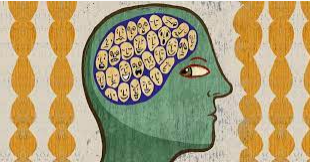
I gave up trying to make sense of the terminology for IFS (Internal Family Systems) that includes exiles, protectors, managers, etc. and in a fit of frustration, demanded these ‘parts’ get out of my head and sit on other chairs in my apartment. When I felt them all inside my head creating chaos and despair (like the picture on top), I began to tell them to go sit down where I can see them and listen to what they need to say. Somehow it worked, and I no longer felt like I would go insane with numerous voices inside my head. After describing this to one of my younger sisters, she suggested I write a blog post on the topic.

I like the term One of Me. It describes the detachment I feel when one part of me is functioning and the other parts are not.

One of Me is a workaholic. I used to work full-time jobs plus take college classes, eventually obtaining a Bachelor's Degree in Management Information Systems. Working and studying was my medicine (when I wasn't taking the pharmaceutical kind)... a distraction from the emotions and feelings I couldn't deal with. Post-disability, as long as I had projects to work on, I was okay. You can say I am addicted to distractions.

One of Me is a lonely, abandoned, traumatized, scared child… afraid of the outside world… afraid of the unknown. She looks at people on Facebook who are having fun with their families… even traveling to be with them… and doing activities she can no longer do… like hiking and exploring. She sits down and cries inside because she is grieving for the family she no longer has even though her siblings live in other states. She also grieves for places she can no longer go. Isolation is painful. How did she survive all these years?

Indeed, One of Me is a survivor. Despite all the traumatic experiences, she is still here. Still breathing. The Divine has been by her side making sure she has her basic needs… food, shelter, transportation… even when she detached (disassociated) and couldn't feel the support.

One of Me is a dreamer. She used to dream of a future that includes fame with writing and music... and traveling in a nice RV.  Is it still possible? I don't know. I am older now.

One of Me experiences chronic conditions such as adrenal fatigue and spondylolisthesis and needs someone to take care of her and help with chores. Community Attendant Services didn’t work out, so she is on her own again. At least the Divine brought a Mobility Scooter and a van with a lift.

One of Me is an educated adult who knows what to do for the other one. She tells her to lie down and rest as much as she needs to and just tackle one thing at a time. Nothing is permanent, not even fatigue. Since fatigue usually partners with depression, reassure her that it is temporary. She usually begins feeling better in the afternoon.

One of Me is a compassionate adult who listens to other people when they call or come to her with their concerns. She is also an empath and can't always release the emotions she absorbs from others. She has to learn to differentiate what is hers from what is others and clear the others out. Towards the end of this last depressive episode, it occurred to me that I can listen to the other One of Me's the same way I listen to other humans... with a sense of detachment.

YouTube is smart and suggests videos to you based on everything else you have been watching, reading, writing, purchasing, and listening to. I opened the YouTube app one day and found the audiobook Love Yourself Like Your Life Depends On It by Kamal Ravikant. Then I purchased the book. 

On another day, I found an interview with Bruce Lipton on his Biology of Belief. Bruce said to incorporate the affirmations into your subconscious, listen to them as you go to sleep. I created a playlist for Sleep with two "I love myself" videos so it would stop after the second one. I am usually awake during the first one and fall asleep as the second one plays.

YouTube also suggested Wayne Dyer's The Power of Intention audiobook which I listened to twice. Perhaps YouTube talks to Amazon and knows I had purchased the book. “I intend to feel good. I intend to feel happy. I intend to choose thoughts that make me feel good. There is a solution to every problem." I rewrote my personal affirmation list to include these and to read throughout the day.

I found two Wednesday night online support groups through Mile Hi Church in Colorado: Transcending Trauma and Heart, Mind, Spirit Recovery. (The ministers at that church were originally in Huntington Beach, California when I lived there.) Trauma meets the first Wednesday, Recovery every Wednesday. While Recovery is mainly for alcoholics and drug addicts, I qualify because I took strong pharmaceutical drugs for close to 15 years. Besides, I am addicted to sugar which is known to be as addicting as cocaine. What do I want the most when I feel depressed? Sugar! I know what it feels like to want it even though I know it isn't good for me. It feeds candida which is not my friend. I do my best to avoid gatherings that serve sweets. Wish they would serve organic fruit instead.

Back to Transcending Trauma. The facilitator told us grief gets mixed in with trauma. I could think of a whole list of things I’ve been grieving about. Loss of childhood, loss of my siblings as I knew them, loss of my parents, loss of homes, loss of relationships and marriages which turned out to be dysfunctionally matched with me as the empath and them as narcissists and energy vampires, loss of possessions when I had to walk away from everything, loss of all the foods I discovered I had sensitivities to and had toxins such as glyphosates, loss of the social circles that serve these foods. 

Grief changes you. You don't ever go back to what used to be normal. No wonder I feel detached and disassociated. Instead of clinging to what used to be, I have to completely let go. I have to incorporate my Sky-Diving principle. Yes, there is fear in the unknown, but trust that I will land safely. I found a few groups on Facebook and Instagram on the topic of grieving which have been helpful. They say that eventually, you figure out a new way to exist. Fortunately, I can use the search on my blog to find topics I wrote about in the past but have no memory of.

Well, One of Me writes songs and strums an acoustic folk guitar. A song titled Wrong Planet began to emerge, describing my challenges as simply being on the wrong planet. I began to hum it when I go into the outside world or even think about going out there, and it feels comforting. 

The lyrics to Wrong Planet 

I’m visiting from another planet, observing earthling ways.
My ship left without me – said they’d return for me someday.
I have trouble fitting in with people in this place.
How do I explain that my ship got lost in space?

I’m on the wrong planet – and I need to find some friends.
I’m on the wrong planet – can’t keep up with the trends.
I need someplace to belong because earth isn’t it.
I look around this strange land where I don’t seem to fit.

I feel complex and complicated, fractured and duplicated.
How did I end up here in this place that’s overrated?
Show me love; show me grace; be kindness in this place.
My heart cries for the sadness that invades the human race.

My mind is like a mansion – it has a lot of rooms.
Let’s take a tour together to find our way out of this gloom.
It’s part of a life lesson… I’m writing a new theme.
Where will it lead me… just nothing too extreme.

There are ripples in the water, life is never still –
and neither are emotions that tumble down the hills.
I emptied out my closet, but I wish I could empty out my mind.
Boxes all shapes and sizes are filled with memories of every kind.

Courage, I know you’re somewhere; I’m searching for a dose.
I’m on the outside looking in, but I can feel you somewhere close.
I feel like a dreamer – can you read between the lines?
I’m a mysterious collection of rhythms and rhymes.

I’m on the wrong planet – and I need to find some friends.

Copyright © 2022 Renee Alter

Monday, October 14, 2019

The Let-Down Effect and Expansion

Last week, I experienced another adrenaline rush followed by what I learned is called The Let-Down Effect. On my way home from an iRest Yoga Nidra meditation held in the building that was previously the fire station, I encountered a pole extending across the side-walk while I was riding my mobility scooter... didn't see it until it was in front of my face... barely stopped in time. Two days later, I decided to call the fire department to report the hazard as it had been their building. I was told the new owner would be contacted.

As soon as I hung up from this call, my heart began racing and fireworks of shooting spasm-like pain started in my lower back and shot all the way up to my neck. BREATHE. BREATHE. You know what this is now. It's adrenaline letdown. It will pass. BREATHE. At least this time, I didn't get the exhaustion followed by getting sick.

Once it subsided, I Googled "remedies for adrenaline letdown" and found this article. (Click on the link to read more.) The Let-down Effect.

"It's long been known that stress can lead to illness but only recently has evidence emerged that some people tend to get sick after a pressure-packed period has ended." "During acute stress, the body releases key hormones – including glucocorticoids (like cortisol), catecholamines (like norepinephrine) and adrenaline – to prepare itself to fight or flee from danger and to trigger the immune system to step up certain types of surveillance. In the process, "glucocorticoids can reactivate latent viral infections such as herpes simplex 1 [which causes cold sores] and Epstein-Barr virus [which can trigger fatigue, fever, sore throat and swollen glands], for which symptoms are only obvious after a few days,"...

The Let-Down Effect explains why I have gotten sick after stressful situations occur!

Since my last post about 'parts,' my quest brought more results to add to my collection.

I had Barbara Ann Brennan's two books: Hands of Light and Light Emerging on my bookshelf. They caught my attention when I was looking for the next thing to read while peddling on my recumbent bike (30 minutes at a time). For me, reading and digesting what I read can be miles apart, but even if I get just one thing out of it, that one thing is more than I had before. Thirty minutes of reading this material is all I can handle at one time. I finished Hands of Light and opened Light Emerging.

Meanwhile, I had purchased the book Transforming Anxiety: The HeartMath Solution for Overcoming Fear and Worry and Creating Serenity. HeartMath was one of many therapies suggested in the book The Body Keeps The Score, and I wanted to learn more about what this was. In addition to a book I read (reeeed) while cycling, I always keep a book to read by my bed. (The rest of the time, I read stuff on the internet.)

"HeartMath technology is an innovative approach to improving emotional wellbeing. Learn to change your heart rhythm pattern to create physiological coherence; a scientifically measurable state characterized by increased order and harmony in our mind, emotions, and body." You can read more on heartmath.com.

I'm still reading the book. So far, I've learned about something called 'overcare' (caring too much) which results in anxiety. There are exercises and meditations to do to become AWARE of thoughts, feelings, and the stories you tell yourself about your experiences. Trauma often affects heart rhythms, and HeartMath relates to becoming aware of your heart rhythm and 'regulating' it consciously through meditation. I must have over a dozen recorded meditations so far... and can't decide which one to listen to. Sigh...

Meanwhile, someone I knew from past involvement in a writer's group contacted me about iRest Yoga Nidra. He was doing a series of four classes in my town and thought I'd be interested. YES. Especially when I learned it was a method of trauma therapy. He also provided me with a link for a four-week clinical study on iRest Yoga Nidra. I applied and was accepted into a program for aging adults. I couldn't wait to find out how to alleviate my anxiety about getting older... getting older with chronic pain. There are four videos to watch, a study guide to download, and homework to do.

In iRest, one must identify feelings and emotions AND THEIR OPPOSITES. Decide on your heartfelt desire (????), set an intention (????), and find your inner resource (????). In meditation, you go back and forth between the feelings and emotions you came up with. The goal is to sense where in the body you feel them and cease reacting to any of them... to make it all neutral. Even be OK with PAIN. We get to choose two sets of opposites in each category.


Information overload... frustration... I must figure this all out... and my brain tells me, "I feel so stupid," because I can't make the connections I'm supposed to in all of this... then I remember that this is the point of the course... to learn HOW... and now I have a negative emotion I can use in this exercise. Feeling stupid.

I'm used to doing things like this in a group where I can hear what everyone else is doing and get ideas. I could take a break and MEDITATE... and listen to what comes up... but I'm too wired to do that... the whole point of meditation is to SLOW DOWN.

In addition to Jay Shetty (found him on Facebook), who used to be a Buddhist Monk, in this iRest program, I now meet Michael Sapiro, PsyD, who also used to be a Buddhist Monk. I remembered how years ago, after meeting a woman who was studying material (can't remember exactly what) with a group who met at an Eastern Medicine doctor's house.

Meanwhile, one of the pages or friends I have on Facebook posted something by Michael Cupo. Michael wrote It's Monday in Your Mind: You Are Not Your Thoughts. I read some of the pages from Look inside on Amazon and also explored his website. He was teaching the same concept.

And meanwhile, I came across posts from Byron Katie: A Mind At Home With Yourself. I read some Look inside pages from her book on Amazon and explored her website. She was teaching this concept, too.

In 2008, I totaled my GMC Sonoma. When the truck came to rest in the ravine, everything in it came flying at me. I feel like all this information is flying at me in the same way. But the message began to get clear. One must develop the ability to observe all they experience without reacting to any of it... no matter how good it is or horrible.

Can someone like me... who can be an emotional rollercoaster... from excitement to despair and back up again... learn how to do this? Do I want to? I was just getting the gist of raising my vibration by focusing on pleasure with all of my senses... and pushing out everything else. But according to all this other material, doing so causes RESISTANCE. And resistance contributes to anxiety. Even Teal Swan teaches this.

It feels like a vicious circle. I have anxiety just thinking about the process. All the feelings and emotions have minds of their own. There are DOZENS of them. Each lives in their own little compartment. They don't even know how to be friends. All I feel is the result of resisting them when more than one decides to surface and declare war on my field (my physical body)... which contributes to anxiety. But in order to conquer the anxiety, I must be able to identify and feel where in my body each of the feelings and emotions reside.

Which comes first? The chicken or the egg?

I'm waiting for all this information to CLICK. Assimilation. It did for all the teachers who are now teaching this stuff. I know because I read their bios. Each and every one of them started out with one situation or another that resulted in trauma, anxiety, and/or depression. They found a program that helped them and are now teaching. Some have expanded the program they found into one of their own.

Maybe it is like a murder mystery... and requires an investigation... after all... I did attempt to murder my other 'parts' (read the previous blog post) when I suppressed them.

I feel like I am being followed... by a stalker... by many stalkers... parts of myself I abandoned a long time ago. Maybe I feel threatened because I have been stalked by a human stalker in the past and my brain is mixing them up.

Maybe I resist studying... and if I change the task to doing an investigation, I will enjoy it more.

I want to feel safe inside my body. I don't remember when I decided I wasn't. I want the courage to face the other parts of me that threaten my peace of mind. Perhaps these other parts have the answers I seek... I'm sure they do... but there are so MANY other parts! And I haven't learned how to listen to only one at a time... yet...

I'm good at staying busy and distracting myself... and many others do the same. We are human BEings. But very few people want to just BE. Mmmmmm. Perhaps that bee that hovered around me (I wrote a post about it) had this message for me, too. BE.

Sunday, October 6, 2019

Parts: Internal Family Systems

The journey of self-discovery continues after I read the book: The Body Keeps the Score by Bessel Van Der Kolk, M.D. This book was recommended to me by Frankie Perez of Frankie Perez's Mindgym after I commented on one of his Facebook posts regarding trauma recovery. Bessel includes information about many different therapies... including IFS... Internal Family Systems... the PARTS of us that as a whole makes us human.

As a seeker, I feel there is still much more to learn about myself and how my mind works. In understanding more about myself, I can understand more about other people, including family, which opens up my world as I realize their behaviors are/were never about me. As a seeker, intense curiosity rules. I am forever surprised at how much more there is to learn.

What if?

What if I have the potential to discover much more than what I already know? Can I stop comparing myself to others? If I could go back in time, would I have continued my formal education? Would getting a masters and doctorate degrees have made a difference? Would I still feel intimidated by people who have "Dr." in front of their name?

I often felt 'split' depending on who I was with and what was going on in my life. I've felt the bliss of being in love with either a person, a cat, an idea, a song, a book, a piece of art, and more. I've also felt the depth of despair and hopelessness... when I completely disassociated. Among other things, I've come to know I am an introvert with some extravert characteristics. I've come to know my 5-year-old still lives inside of me... both the happy girl and the frightened one.

When I read about humans being made up of PARTS, I sighed with relief. While I like the idea of being a mystery, I feel much more comfortable when I understand what is going on.

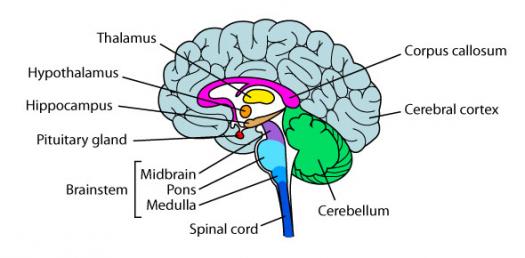
Yes, I know about arms, legs, eyes, ears, and all the internal organs as parts. I learned about the different parts of the brain. I fell in love with the term "Amygdala Hijack." The amygdala stores the emotions, and when you feel out of control, it is the amygdala that hijacks you, so you can't think clearly.

I've been learning about how various parts of the brain store different parts of memories. In the case of severe trauma, the reason we can't remember exactly what happened is the memory splits up into different parts of the brain. With the right types of therapies (vs. drugs), the fragmented parts become integrated, and a coherent story begins to form. Then with further steps, the brain can be trained that what happened took place in the past vs. memory hijacking you back into the past resulting in symptoms such as a racing heart, panic, anxiety, and more.

With each growing stage of my life: infant, toddler, grade-schooler, middle-schooler, teenager, high schooler, adult, and every role I've played, I often felt like I was different people. Hormones got their way with me as well as depressive episodes.

Parts? Yes, parts. "The mind is a mosaic. We all have parts." Now my intense curiosity leads me to investigate these parts and become familiar with them. "The mind is made up of relatively discrete subpersonalities, each with its own viewpoint and qualities." "Parts are not just feelings but distinct ways of being, with their own beliefs, agendas, and roles in the overall ecology of our lives." "Each split-off part holds different memories, beliefs, and physical sensations."

Parts include the manager, the firefighter, and the exiles.

Who is the manager? What characteristics does she have? The manager's job is to "prevent humiliation and abandonment and to keep her organized and safe." The manager part was (and still is) competent, held responsible positions, and produces quality work... all while doing an outstanding job at sending all the other parts into exile. The manager told me to grin and bear it because no one wanted to hear about my pain. If I did talk about it and felt the discomfort of the listener, there was embarrassment and shame as well as feeling invisible. The parts I sent into exile were, indeed, invisible... until an amygdala hijack brought them out from hiding.

But it wasn't just me. "It emerged that, as children, nearly all of them were supposed to be seen and not heard--safety meant keeping their needs under wraps."

Who are the exiles? "Exiles are the toxic waste dump of the system. Because they hold the memories, sensations, beliefs, and emotions associated with trauma, it is hazardous to release them." "When exiles overwhelm managers, they take us over--we are nothing but that rejected, weak, unloved, and abandoned child."

I love reading the description that shines a light on all of the unidentified suppressed confusion in my mind and emotions.

Are there any other exiles beside the happy child and the frightened one? How can I retrieve the happy child? Why did I exile her? How can I retrieve more happy memories and FEEL the happiness of those experiences? I'm sure in reality there were many happy moments, yet in one of many cognitive distortions, I discounted the positive and dwelled on the few negative experiences.

Why did I make that decision? Why does ONE demeaning statement take control of your entire life? Why does witnessing ONE act of violence do the same thing? Who is the critic I also sent into exile who is quick to judge both herself and others... and then get overwhelmed by guilt when she realizes she was thinking a critical thought?

Who is the firefighter? What does she do when a threat appears? How does she react? Is she really putting out the fire or building a tomb?

Who is my true Self: the Self that is confident, curious, and calm? The one writing this post? How do I make friends with the 5-year-old, the 9-year old, the 13-year-old, and the 17-year-old who demand attention when I want to read yet another book about recovering from past traumatic experiences that are programmed into my nervous system and feels like dead weight keeping me from going where I want to go?

Where, exactly, DO I want to go? Once I figure myself out, then what?

True Self knows the thrill of life is NOT always knowing where you are going... and take one day at a time. But... the 5, 9, 13, and 17-year-olds say...

WHAT ABOUT US?

Tuesday, April 30, 2019

Adventures in Medicine

I am self-proclaimed OCD when it comes to an obsession with words and spending hours-days-weeks typing them up in the correct order so everything makes sense--rereading what I wrote many many times because I can’t remember what I wrote. I have self-published many books that few people read but maybe they will one day. In the meantime, I like having them like an artist has their art.

I now have an Amerigroup Medicare Advantage HMO plan that gives me access to much more than I had access to on Traditional Medicare. The first thing I did was look into switching over to the Seton Clinic and their network of providers.

And each time I have an appointment with a doctor or other practitioner, especially a new one, knowing I don’t have much time for the visit, I hand them a typewritten report. If I have multiple visits with different doctors/practitioners, I type a different report for each one of them. Some people just write down the questions they want to ask on paper, I type a report that includes known conditions, my symptoms, the purpose of the visit, and my specific requests.

I will report to you on the appointment I had with my new PCP last Tuesday--who I think is amazing. The first thing he did was walk up to me, shake my hand, smile, and say, “Hi, I’m Corey, it’s nice to meet you.” I’ve never had a doctor do that. But he’s not a doctor, he’s a nurse practitioner. The best doctor I ever had when I lived in California was an NP. Corey spent over 30 minutes with me. When my blood pressure was taken with him in the room (and shot up to 200--IKES!), he asked if I had white coat fever--YES--and apologized for not taking off his white coat.

First, I complained that my left ear and left side of my face had been feeling congested, and the sound of my own voice was muffled. He identified my left ear had so much impacted wax, he couldn’t see my eardrum. I was instructed to soften it up and return in two days to get it cleaned out... which I did... and I feel much better.

Second, I’d been dealing with wicked sore throats for longer than I can remember and difficulty swallowing for over two months. I thought maybe I had mono again or it was allergies, but he asked me if I ever was diagnosed with esophagitis. He said the esophagus goes all the way up the throat. My eyes went wide as I remember that in 2006, I was diagnosed with an eroded esophagus. He asked if I ever had a 5-year follow up. Didn’t know I was supposed to and didn’t realize I’d have to keep babying it. I am getting a referral to a gastroenterologist to get a current endoscopy.

Third, I have really dry eyes, dry mouth, and dry throat which I had been previously blaming on the medications used to take, followed by my CPAP machine. He asked me if I had been tested for Sjogren’s. Nope.

Fourth, just the same, I had found out I could continue to go the same sleep specialist/cardiologist if I get a referral for a continuation of care. When I got home, because I now know I have esophagitis, I Googled CPAP and esophagitis. Lo and behold, CPAP machines can blow air down the esophagus if there is something dysfunctional which is called aerophagia. It was obvious during my first year when the air pressure was set too high... but apparently, additional adjustments need to be made.

Fifth, I filled him in on the situation with my spine and asked if I can get referred to the right doctor who can refer me to the right physical therapist. I also asked if I could get referred for a home health aide (covered by my new plan) and hopefully a physical therapist that will come to my home.

I went for blood work yesterday (Corey ordered tests for just about everything--watch it all come back normal), and I will have several appointments with specialists who are up to 60 miles away. This involves taking my mobility scooter with The HOP van transportation which my new insurance will pay for. I’ll have to pack food to take with me... something to do to keep me busy... and navigate the scooter in and out of restrooms and new environments. Note to self: bring a blanket. I froze in the lab.

In the meantime, I’ve been slowly digesting everything I’ve read and know about how suppressed emotions manifest as physiological symptoms and have concluded that my repressed emotions are suffocating me.
  • Sleep apnea
  • Inflammation of my esophagus, so it is hard to swallow.
  • Sometimes, it’s hard to breathe.
I wonder if I am choking on all the things I’ve never had the courage to say.

I also had with this new insurance two online virtual psychological counseling sessions so far and will be able to continue as long as I want to. I had been worried about zoning and dissociating from the part of me that felt good when I feel bad and vice versa when I don’t feel good, I can't relate to the part of me that felt good. 

My counselor began to tell me about the trauma a woman has when she is giving birth to a baby, yet she won't remember it and will have one or more children due to what is called 'containment.' I have to do more reading/research on this, but all I can say is it is something the brain does to protect you. Ahhh... my brain is protecting me.

I will be thinking about how traumatic memories of giving birth to my son no longer affect me, yet many other incidents of traumas still do. I am asking myself what MEANING did I put on those other experiences that were different than giving birth? My homework is to look into EMDR therapy and call to see if a therapist with this specialty is available.

I have often wondered if the reason pain medication has never worked for me is because if the pain is emotional vs. physical, it wouldn’t. If the pain is in my brain and not my body, it wouldn’t. Analysis paralysis. While some people drink or eat or take illegal drugs or have other addictions, maybe I am addicted to figuring myself out... and everyone else, too.

I’ve read lots of books, subscribed to The Mighty and NICABM, and listened to lots of videos and webinars by Teal Swan, Abraham Hicks, Dr. David Burns, Dr. Joe Dispenza, Rebecca Hintze, Bruce Lipton, Dr. Keesha Ewers, Dr. Mark Hyman, and more.

Between fatigue, brain fog, ADHD, and a brain that won’t do what I want it to do because thoughts keep vanishing which is frustrating when I am trying to do self-care tasks, I suffer from information overload.

According to all the following people, I should be able to get better if I do what they have been able to do. It could be an unreasonable expectation, but what if it isn’t? Overall, I am not experiencing as much physical pain as I did in past years.

Dr. Keesha Ewers had autoimmune diseases until she freed herself of repressed emotions--then became an integrative medicine expert. (Solving the Autoimmune Puzzle: The Woman’s Guide to Reclaiming Emotional Freedom and Vibrant Health) 

This morning I had a flashback of going on two 3-day mountain climbing trips when I was 16-17 years old... in the White Mountains... New Hampshire... where ticks carrying Lyme Disease populate. I looked it up and saw in addition to swollen lymph glands and fever, one of the symptoms is Bell's Palsy type paralysis on one side of the face and another an enlarged Spleen. 

Wait! I developed all this! Is it possible I was misdiagnosed as having mono when I actually had Lyme? I don't remember getting blood tests--only being diagnosed with the symptoms. If so, Dr. Keesha and other doctors have solutions for dealing with autoimmune diseases.

Teal Swan overcame much worse childhood abuse and torture than I dealt with. She now travels all over the world doing seminars. She says depression happens when we resist our emotions and the futility of life situations. (The Sculptor in the Sky and The Completion Process)

Abraham Hicks talked about contrast--with emotions being your compass vs. your enemy. And she says we incarnated because Earth is the only place we can create and manifest--that we’re supposed to have fun doing it. And if we commit suicide, we’d just come right back again for the same reason. (The Amazing Power of Deliberate Intent: Living the Art of Allowing)

Dr. Joe Dispenza says we create our future from our past emotions and memories, and unless we figure out how to break this cycle, we’ll stay sick and in pain. We must learn to set a new intention with an elevated emotion and our body/brain will follow. (Becoming Supernatural)

Rebecca Hintze is a life coach and emotional-wellness counselor who promotes essential oils to create new neural pathways in the brain, and yes, I have some essential oils. (Essential Oils for Happy Living and Healing Your Family History)

Nick Ortner promotes tapping, and I’ve tried that, too. (The Tapping Solution)

Dr. Mark Hyman, a doctor of functional medicine, said his brain broke twice--first from mercury toxicity while he was in medical school and the second time two years ago from black mold he didn’t realize was in his house. He went from one doctor to the next with undiagnosed mercury toxicity until he found a functional medicine doctor who identified it and treated it. He then went back to medical school and changed his focus to functional medicine. I watched his two documentary series: Broken Brain and Broken Brain 2.

Bri, my holistic nutritionist, did a presentation that included her background and how she recovered from numerous health issues after she got a job with a functional medicine doctor who treated her. When she got well, he trained her to do what he does. She strongly suggests I get all my mercury fillings taken out. (And Dr. Hyman says some people do not have the ability to handle the load.) She says it's the mercury aggravating my throat.

Information overload. Can you relate?

I just want technology I can plug into that runs an analysis and comes up with the current state of my physical, mental, and emotional state as well as suggested solutions. Is that too much to ask?

Sunday, April 7, 2019

Continued Education

I've been very busy! Even if one is sick one is busy... taking care of yourself and resting.

First, there was a week of figuring out how to overcome my own PTSD to figure out how to help someone else who was dealing with their own mental health crisis. Once I had the initial adrenaline rush when my neighbor banged on my door at 2:30 in the morning on Monday, March 11, just as it has done in the past, my sympathetic nervous system wouldn't calm back down. I felt the ongoing survival stress response all during the week... hoping that improved self-talk would calm me back down. I had to search my subconscious mind to figure out what exactly 'triggered' me. A memory? Or just an adrenaline rush? What was I telling myself? (Why can't you act like a grown-up?)

That Wednesday afternoon, there was a continuation of Monday night's drama. I was feeling powerless. At least I had company at the time who offered support.

On Thursday, I decided to face (unrealistic) fears and report the incident so I could find out what action I needed to take should it happen again. After all, I did go to the one-day seminar on Mental Health First Aid, and I desperately wanted to 'feel' like a grownup! In the course, we were told if someone you know (or yourself) is having a mental health crisis, to call the police department. Many of them have been trained on how to handle this type of crisis. I did, indeed, get the answers I needed, but my sympathetic nervous system wouldn't calm back down. (I find it interesting that it is called sympathetic as it wasn't being sympathetic to my plight.)

The following Monday, I felt sick. My body hurt all over, especially with intensified sensations of sharp points sticking into my upper back. My chronic sore throat got worse--to the point I couldn't swallow (and I thought about my inability to speak up when I needed to). The fatigue was a literal killer, and I often found comfort in my bed throughout the day... for 10 days. I had to sum up the courage to miss a monthly meeting for one of the organizations I belong to. In the midst of making that decision, I had a flashback of not being allowed to miss school when I didn't feel good. But now I'm a grownup and can make that decision for myself. Yes? I requested that someone else take the minutes for the meeting.

I got some energy back just in time for the morning of March 28, when I attended the first of 5 sessions of Master of Memory--Am I Losing My Mind? facilitated by the County Extension Agent. Since we all seem to have memory issues, I am sharing what I am learning... which, of course, is filtered through my perspective (haha).

I found out I am not as bad as I thought I was memory wise. There are 3 basic types of memory: Sensory (momentary sensations and impressions), Short-term (holds information for several seconds while we decide what to do with it), and Long-term (can last forever--even if it takes time to retrieve info). We talked about how we go blank when trying to remember something then wake up in the middle of the night remembering or recalling the following day a piece of information we couldn't remember the day before. I'M NORMAL! Unless you LEARN what is being processed in short-term memory, you won't retain the information.

Three types of learners: Auditory, Visual, and Kinesthetic. I learned that I am mostly a kinesthetic learner--one who learns best by doing--needing to experience something "hands on" to learn how to do it. Visual? There was a sentence with six 'F's in it, and I only could find TWO. How trippy! The class had a good laugh because I am not the only one. It was to prove if you are not a visual learner, you wouldn't see them all.

Why can't I remember? All kinds of reasons. One of these is stress (overactive sympathetic nervous system), and one of these is habits. Losing your keys (or anything else) when you put them in a different place is not a memory problem... it is due to breaking a habit. I think my life runs mostly on auto-pilot based on habits... including where I 'file' physical pieces of information. When I go back to look for something, many times, it isn't where I thought I put it. This happens in your brain, too?

The best learner blends the three types to maximize performance. You must exercise the brain regularly just like you need to exercise the body. If you do the same brain exercises every day, you will lose other parts of the brain's ability as if you are only exercising your legs vs. your whole body. Suggestions: do things with the non-dominant hand, word games, brain teasers, trying new and different learning methods, conversation, and continuing education. I prefer the continuing education part. Use it or lose it! It's been a while since I've played my guitar or keyboard. Maybe it's time I start again... motivated or not... so that part of my brain won't atrophy. Subsequent modules will address other aspects of memory.

The fatigue lifted, but I still had pain and that awful sensation in my upper back and felt desperate for relief. On the afternoon of March 28, I went to see Bri (holistic nutritionist) and explained to her what happened with my dysregulated nervous system. (Feeling pleased that I now have the knowledge and terminology to understand and explain this concept.) I went home with instructions to increase a few of the homeopathic potions I already had along with a number of new ones, including supplements. I had to also 'allow' these to support my body's recovery.

I began to feel much better in a few days... just in time to get the energy I needed to listen to two new documentary series both of which launched on May 3: Broken Brain 2 and Eastern Medicine. So far, I've been able to watch all of them. My ears perked up each time the topic of the dysregulated nervous system was discussed as well as how chronic stress affects your overall health.

In between, I received an email from Rebecca Hintze on her newly released Emotions Mentor Podcasts. I listened to Key Steps to Developing Resilience, The Plague of Anxiety, and Mental Health & Where it Starts.

On May 4, I went to session 2 of Master of Memory--Memory Strategies. Strategies include Concentration, Association, Repetition, and Relaxation. I have some homework to do...

Sunday, February 24, 2019

The Relationship Between Trauma and Resilience

I am curious. Did you play in competitive sports when you were in school? Did you ever get hurt? I bet when you did, you got right back up into the playing field again.

Some kids play in competitive sports from the time they are really little. They get pushed, shoved, hit, thrown, get bruised, break bones – and get right back up and play again. I wasn't one of them.

Maybe you were like me – one of the kids who was bullied in school, had an older sibling who intimidated you, and a father who assaulted you with degrading words, so you grew up feeling worthless. I was traumatized each time I got hurt physically or emotionally.

One time, I was riding my older sister's big bike when no one was looking. I didn't know the brakes didn't work and couldn't slow down when I came down the hill and turned the corner, making friends with the stone wall. I sprained both my wrists in addition to the other scrapes and bruises the bike and the wall decorated my body with. I'm sure I suffered emotional wounds as well.

When I was 21, I dozed at the wheel and opened my eyes just in time to see the parked car I was about to crash into. My Fiat folded like an accordion and I sustained a whiplash, concussion, and a lot of bruises – especially where the seat belt was – across my chest and hips. A 19-year-old boy I was infatuated with had just broken up with me, so this emotional trauma was layered on top of the physical injuries.

When I was 36, I lost control of my Toyota and jackknifed sideward into a bus bench that was cemented into the ground after a lady driving a Mercedes clipped the back, right corner. I couldn’t walk for months. At the time I had this accident, I was an emotional mess in the midst of a volatile relationship with a narcissist. Once again, trauma was layered on top of physical injuries.

It seemed like the injuries I collected never healed, which contributed to the chronic pain condition the doctors diagnosed as Fibromyalgia. They were very generous with all the drugs they prescribed to me, and by the time I was 43, I couldn’t work anymore and found myself on permanent disability.

When I joined Killeen Toastmasters in July of 2015 at the ripe old age of 59, I began to get a different kind of education. I heard stories from fellow members about all the adversities they’d faced and how they were dealing with them…especially from Tim. And I couldn’t use the excuse that I am a female because I met women like Anca, who was a professional boxer, and Rolana and Delsina who were in the army. I began to wonder… what do they have that I don’t?

Some people become firefighters, police officers, first responders, go skydiving, skiing, go bull riding, go into the military, and volunteer for rescue missions. They face danger, get hurt, recover, and go face the danger again. I wanted to know HOW.

I began to do some research, found some books, and I believe I finally figured it out. It’s the relationship between Trauma and Resilience.

In Dr. Peter Levine’s book, Waking the Tiger: Healing Trauma, I learned that trauma, especially in early childhood, programs your brain and nervous system to stay in survival mode – always on alert – because you never feel safe. Because of this, you don't get the rest and repair cycles you need to heal.

I found data showing that most people who have had adverse childhood experiences, also known as ACE, develop autoimmune diseases, chronic pain, adrenal fatigue, depression, anxiety, and PTSD.

I found an ACE questionnaire online. I scored 8 out of 10. Here's the link to the quiz so you can take it yourself:


I found out I am not alone when it comes to ACE. People who have suffered from ACE become afraid of everything. Fear attracts more situations to be afraid of – like the abusive relationships I blindly walked into. It makes you jumpy because your adrenals are constantly being ignited – and rarely for any good reason. 

On the US Dept of Health & Human Services website, Substance and Mental Health Services Administration, I found: “Adverse childhood experiences (ACE) are stressful or traumatic events, including abuse and neglect. They may also include household dysfunction such as witnessing domestic violence or growing up with family members who have substance use disorders. ACE are strongly related to the development and prevalence of a wide range of health problems throughout a person’s lifespan, including those associated with substance misuse.”

Sam Goldstein, Ph. D. wrote: “Resilience explains why some children overcome seemingly overwhelming obstacles while others become victims of their early experiences and environments.”

On MindTools.com in an article on Developing Resilience, I found: “Resilience (or resiliency) is our ability to adapt and bounce back when things don't go as planned. Resilient people don't wallow or dwell on failures; they acknowledge the situation, learn from their mistakes, and then move forward.”

I've been making some progress – investigating ACE and watching for ANTs around fear (automatic negative thoughts). The main ones are convincing my brain that the pain in my body is not dangerous – which in my case it isn't – and developing a sense of safety and self-regulation. I am easily triggered into a PTSD reaction with my heart pounding, back spasms, and exhaustion. I hope to find a way to regulate my nervous system in the near future to stop the vicious cycle of fight or flight so my body can rest and repair itself.

In conclusion, if you're like me, dealing with PTSD, fear, auto-immune disease and/or chronic pain, look into ACE and Resilience. You may be surprised what you learn about yourself, the people you grew up with, and the people you know now.

Thursday, May 24, 2018

The Subject of Healing Trauma Continues/Synchronicity

I used to think that trauma just involved people (including me) emotionally and psychologically. I also used to think that “other” people didn’t suffer the consequences of trauma the way I had.

Yes, I’ve come a long way in processing traumatic experiences, but it seems like there is always more work to be done. (Life is a journey...) When I picked up Waking the Tiger, Healing Trauma by Peter Levine, I found this out. Apparently, trauma affects a lot more than I had conceived. According to Levine, EVERYONE is affected by trauma. Everyone? That is new news to me!

Thanks to people like Levine who love to do research and have an insatiable thirst for knowledge and answers, I’m sure it was no accident that I came across his book. It meant to me that I was being provided with another piece of my journey to healing. Indeed, I also have an insatiable thirst for knowledge and answers when it pertains to my health and the health of people I care about.

Levine studied what animals do when they are faced with a traumatic event—like being attacked by a predator. Many times, they FREEZE and PLAY DEAD. Here I had been harboring the false belief that freezing and pretending I was asleep, which had been my reaction to impending traumatic events, was not OK. I had no idea that it was a natural instinct.

But animals have the ability to ‘shake it off’ while us humans stay frozen, and what stays frozen is energy that gets trapped in our physical bodies. We tense, brace ourselves in fear, freeze, play dead, collapse in terror, but never discharge the pent-up energy our brains decided was necessary to escape those situations (and our attackers).

I will definitely pay closer attention to the animal kingdom now.

Levine wrote: “Healing trauma requires a direct experience of the living, feeling, knowing organism” and I like that he refers the healing process as, “a heroic journey that belongs to each of us.”

He concluded that “post-traumatic symptoms are, fundamentally, incomplete physiological responses suspended in fear.” “These symptoms will not go away until the responses are discharged and completed.”

“The traumatized veteran, the rape survivor, the abused child, the Impala, and the bird all have been confronted by overwhelming situations. If they are unable to orient and choose between fight or flight, they will freeze or collapse. Those who are able to discharge that energy will be restored. Rather than moving through the freezing response, as animals do routinely, humans often begin a downward spiral characterized by an increasingly debilitating constellation of symptoms.”

As for those symptoms, I don’t know about you, but I was prescribed a lot of medications. I am very grateful I’ve gotten off the last of them. They can be useful for buying time to help the traumatized individual stabilize, however, they suppress the body’s own balancing response to stress and interfere with healing. Of course, unless you have a qualified therapist who can help you with the process of releasing trauma, medications may be your only remedy.

When 1,000 men and women were studied, 40% had gone through a traumatic event in the three years prior. These traumas included being raped or physically assaulted, being in a serious car accident, getting a routine invasive medical procedure, witnessing someone else being killed or injured, or devastation by natural disasters. 

I’m not sure how this next statistic was achieved, but “somewhere between seventy-five and one hundred million Americans have experienced childhood sexual and physical abuse.”

What’s even more staggering is: “The conservative AMA (American Medical Association) estimates that over thirty percent of all married women, as well as thirty percent of pregnant women, have been beaten by their spouses.”

With a new blog post in mind with what I’d learned from this book, I stepped outside to survey the scene outside my apartment building. We are in the process of having the landscaping redone in front of our apartments. As I walked along to the buildings to the right that had already been completed, a resident stepped outside and began a conversation. At first, we were talking about the landscape. I can’t remember how the next part of the conversation began. Was it me that brought up pasture-raised eggs?

I was enthralled with her narration about her life growing up in Mississippi. They didn’t have electricity which meant no refrigerators, washing machines, or lighting. They raised their own animals which were periodically slaughtered for food to supplement what they grew in their garden. She described the process of coating the pork with a certain type of sugar and hanging it up to dry, which lasted all winter. They used lanterns for lighting. 

She said she was happy and that her parents were awesome. Then she married a man who beat her (with a little more detail than what I am writing here), and she had six children with him. This part didn't make sense to me because I thought if you had a good upbringing, you chose a good partner. Thus, I found myself losing the excuse that I chose 'bad' partners based on the way my father was.

I changed the subject to something more pleasant. I hope that was the right thing to do. Someday, I may find out more. I considered the conversation a moment of synchronicity. After all, it was related to the topic I intended to write about.

It’s nice to see that I am not alone in what I went through. I continue to read, become aware, and discover the messages my body communicates to me. Next, I want to write about hope.

No matter what we’ve been through, there are processes for discharging the frozen energy in our bodies. Levine wrote about Somatic Experiencing. Then there was a post I saw on Facebook by Lissa Rankin, MD about the inability to cure disease no matter how healthy your lifestyle is if you have unhealed trauma. 

I was ‘sensing’ that something was still missing even though I’ve been eating the right food and taking the right supplements, and like it happens more often than not these days, the info I need shows up in numerous places. 

Dr. Rankin wrote that trauma is anything that is perceived as a threat, overwhelms your coping capacity, produces a sense of powerlessness, produces a feeling of isolation and aloneness, or violates your expectations. “To permanently cure disease, you must do the deep inner work necessary to face, heal, and clear trauma.” “The great news is that trauma is curable!” http://lissarankin.com

When Joseph Fred Wright contacted me about assisting him with a new book, he sent me his previous book titled: Transcripts from the Psychic Hypnotist: The Other Side of Medicine along with his self-hypnosis CD Awaken Your Inner Healer. Synchronicity… how did this 79-year old man know I could use this information? Hypnosis is one of the successful means of helping people heal from trauma. The book he needed help with was on a completely different topic. 

Would you believe he found an article I had forgotten I had written about designing your own book covers and posted it on his Facebook page a month before he was referred to me by the founder of The Central Texas Writers Society I belong to? Synchronicity! I wanted to learn more about this author, so I browsed through his Facebook feed. I saw the article but didn't realize I was the author until after I opened it and read through the end. Memory is not my strong point.

Another moment of synchronicity occurred when I went to my Netflix list and chose Cosmos: A Spacetime Odyssey. In Cosmos, I am enthralled by the narration about matter… atoms and molecules… how much we have in common with nature and animals… the vastness of space… how most of everything is empty space... and everything is energy.

Plus… the numbers 1111 have been showing up… the mileage on my car when I looked down at it… the time on the clock in the car as I pulled in to my parking space 11:11. I opened a video posted on Facebook which had the date of June 11, 2011, at the beginning of it. One of the meanings I found for this related to your thoughts creating your own reality. Pay attention!

I wonder… is this related to the topic of trauma that is frozen in my physiology calling out to me asking for release? Is it related to all the information relating to healing trauma that has been showing up in numerous places? 

1111… pay attention! Believe me, I am!

Sunday, April 15, 2018

Wallflower

Copyright (c) 2018 Renee Alter

The informal definition of wallflower is: a person who has no one to dance with or who feels shy, awkward, or excluded at a party. 

I was such a wallflower. I felt invisible so when I DID get some attention, I was blind that the attention I was getting was from predators... predators who could sense vulnerable wallflowers... not just once, but way too many times. 

I find it interesting that the solo flower that bloomed on my peace lily reminded me of those years. I wondered... did this solo flower bloom solo on purpose?

Is it lonely without other flowers or happy in the company of all the leaves? Can I put myself in the flower's place and admire its beauty and determination to bloom? Can I be content that I had the company of numerous grains of sand on the beach when no one else was there as well as numerous blades of grass?

My perspective of being a wallflower has since changed. I am now in awe of what breaks through rock and cement determined to grow... like this...


Copyright (c) 2017 Renee Alter

I, too, have broken through rock and cement due to my spirit's determination to not only live, but to thrive. My rocks and cement were in the forms of hopelessness and despair believing I was stuck in the situations I found myself in. Without mentors, I couldn't see past my personal stone wall and I  lacked the tools to know how to break through them.

Finally the day came, when the stone wall began to crumble. It was terrifying and I felt like the stone was crushing me. Even the inexpensive apartment I got in 2009 had gray painted cinderblock walls that felt like a tomb, which reflected the state of mind I was in. Yes, I was indeed hopeless. I felt abandoned by my family and hadn't met anyone I could bond with. I imploded into my own mind and didn't know how to get out.

A LOT has happened since then. These days, the Universe sends me people who are feeling stuck in their own rocks and cement so I can finally appreciate my experience of being there. I can encourage them in their own personal journeys and teach them the concepts I have learned about limited thinking and cognitive distortions. I can teach them about validating and releasing their emotions so they don't manifest as physical symptoms.

When they express how hopeless their life is, I can tell them there is ALWAYS hope.

Sunday, February 4, 2018

Old Movies

Copyright (c) 2017 Renee Alter  Fort Groghan, Burnet, TX
I'm sure you have watched a lot of movies... romance, cowboys & Indians, old world wars, fairy tales, Walt Disney, Star Wars, murder mysteries, detectives, and more. Some left you feeling uplifted, some taxed your adrenaline surges, some left you sad and depressed.

Have you ever considered your past experiences as movies? When I began to do this, I gained a completely different perspective of them.

Imagine you are in the movie theatre. You have seen the trailer and decided you wanted to see it... based on about two minutes of previews. Then the movie starts.

The first scene is your childhood and you are the main character. You see your siblings if you have any, your parents, perhaps your grandparents or foster parents if they raised you. Or maybe you grew up in an orphanage. You see yourself in school. Perhaps you were popular or perhaps you were bullied. Perhaps you then came home to witness your parents shouting at each other so you hid in your room.

The next scene is you as an adult. Depending on how old you are now, the journey has been either short or a very long. It may have included illness, accidents, pain, depression, war, death, or a myriad of other possible scenarios.

But remember. You are in a movie theatre watching a movie. All movies end leaving you with the afterthoughts of what you have seen. Soon these memories fade away and are no longer in the forefront of your mind.

Your life has been a movie, too. This means, you can leave the theatre and if you didn't like what you saw or how it ended, you know it was JUST A MOVIE.

Two years ago, I met actor Randall Oliver. He co-wrote stories for children with my friend and fellow author Elaine Kelley about his horse named Nobody (which I published for them). Some of the movies Randy was in were Horror Movies--harsh, evil, and scary--so I wasn't interested in watching any of them, no matter how nice a man he is.

After having conversations with Randy about how he would get totally absorbed in the characters he portrayed, then have the ability to walk away from the set to re-acclimate back to his normal daily life, I came up with the idea of my life being a movie that I could walk away from.

I could pretend I was an actress and the characters in the movies I starred in (family, partners, etc.) were completely different people than the roles they portrayed, which provided me with a way to forgive.

I wonder what actors and actresses do with all the lines they had memorized, just as I had been ruminating about all the uncomfortable conversations I had.

One of the 10 cognitive distortions is discounting the positive. I discovered I had been 'afflicted' with all 10 cognitive distortions, but the one that relates to this post is how I had discounted all the GOOD things that I experienced while I dwelled on the sad, bad, and the ugly. It was as if I only had been collecting the bad movies in my movie box (my memories and subconscious) but didn't pay attention to the uplifting ones.

Consider your past a past filled with OLD MOVIES.

Your old movies can include previous marriages, the death of people and pets you loved, the traumas of the wars you fought while in the military, the traumas of the fires and natural disasters you were either a victim of or one of many rescuers, a horrific car accident you were in or witnessed, and more.

I realize there are many resilient people in the world who have the amazing ability to leave the 'theatre' of their experiences without holding onto the images of the 'movies.' But if you're not one of them...

You've now had plenty of experiences being on the set of those old movies playing various roles, and now imagine you have become a screenwriter and director.

What new screenplay will you write?

Who are the actors and actresses you want to play the parts?

How will you rewrite your life story?

Walk into a new movie!

Wednesday, December 6, 2017

The Adrenaline Connection


Many years ago, while dealing with the aftermath of mono, systemic candida which I developed from numerous doses of antibiotics, and food sensitivities, my adrenals wouldn't function properly. But because they hadn't completely failed, there was nothing the endocrinologist I went to could do.

I remember the day I slammed on the brakes to avoid hitting a cyclist who dashed out in front of my car. I was at the stop light which had turned green, but the young cyclist hoped to make it across before I began to accelerate. The adrenaline rush that came on didn't stop like it was supposed to—I began to feel warm, then hot, then sweaty, then disoriented—a very strange sensation.

Fast forward to the last few years. I joined Toastmasters to develop self-confidence and speaking skills. Each time I went up there to speak, I had the adrenaline rushes. After a while, they stopped being so bad, but I experienced some strange after effects.

One time after I sat down, I felt fireworks of sharp stabbing pains all through my body. I took some slow deep breaths while I waited it out, telling myself I was OK. But in the back of my mind, I was very concerned. I didn’t collapse from a heart attack and the pains subsided. What on earth happened?

Another time after I sat down, I experienced an immediate lower back spasm. I wondered if all the back spasms I had experienced over my lifetime—and all the Fibromyalgia pain—was due to adrenaline issues—a symptom of a chaotic life where I was more often than not reacting to daily circumstances in fight or flight mode.

Then one day about a month ago, after a Toastmasters meeting, a career military man in my club sat down across from me while he waited for his wife who was mentoring a new member. I can't remember how the conversation began, but it led to the subject of adrenaline. He promptly told me about adrenaline rush letdown, a term I had never heard of before but common among those who serve in the military.

The symptoms I described to this man, which included the fireworks of sharp pains and the back spasms were only two common symptoms. There are others, like feelings of depression. The adrenaline junkies—skydivers, bungee jumpers, race car drivers, motorcycle riders, and more deal with them on a regular basis.

Fast forward again to the end of November when I finally had an appointment with Bri Linney, who practices BioEnergetic Nutrition. I’ve done lots of research, reading, and listening to health summits and brought in several pages of notes which included summaries of my current health challenges and my hypothesis about them. I even brought in all the supplements I am in possession of. She asked me how I think she could help me. I replied something of the line of hoping she can pinpoint what my body is asking for nutritionally.

This was definitely a visit I wish I recorded!!!!

You get a whole hour for your first visit. Bri provided a wealth of education on how my system operates in terms I could understand, including the sympathetic and parasympathetic nervous system. She is skilled in knowing what the body wants just by touching it. I only remember three main points which are related to the adrenal issues.

1) Bri paused her exam as she touched my lower abdomen and asked apologetically if I had been sexually molested or assaulted. I am no longer reactive to the memories and answered yes. Afterall, other healers could pick up on this too when they touched my abdomen. She had explained to me different categories of health issues which included virus people. Most virus people have been sexually molested and or assaulted. The first occurrence was when I was 17. I came down with mono when I was 18 (or just before) and dealt with viral issues ever since—as well as repeated instances of sexual molestation and assault, which Bri also said is common. Another mystery solved. I was aware that most people who have Fibromyalgia were abused as children; I was not aware of this other connection. As I’ve done self-improvement on emotional trauma, my overall health has improved. This can explain why I haven’t been sick as much as I used to be even though the ‘energies’ are still lingering in my body.

2) After touching every organ and gland and parts of my brain, Bri explained to me that when you get a concussion, which I did when I was 21, your pituitary gland which seats at the center of the brain gets knocked around—and if I am repeating the facts accurately, the pituitary gland controls everything, including the hypothalamus. She concluded the reason for the chronic sore throats and difficulty swallowing is due to the right parathyroid and thyroid being inflamed which is all controlled by the hypothalamus. The adrenals are, too. This is another reason why I love energy medicine. This stuff doesn’t show up in blood tests.

3) I wanted to wean off Mirtazapine, the generic to Remeron. I’ve tried twice unsuccessfully and hoped she could assist me with it. Bri explained to me that it is helping the part of my brain that is not functioning like it should be and advised me to stay on it until I can get that part to improve.

I walked away with two homeopathic remedies for both hypothalamus and inflammation. I have complete faith in homeopathic remedies from years ago when I got one for my son who had severe cat allergies. Each day we visited my Mom who had a cat, his eyes would swell shut. When I discovered the BioAllers drops and gave it to him, it not only helped after the onset of a reaction but over time his immune system adjusted and he no longer had these reactions. I vaguely remember using another formula for an allergy I was dealing with as well.

Bri had also tested all the supplements I brought with me and determined how many of what I should take over the next month. I felt validated that I was on the right track—she suggested increasing the CBD Oil and Copaiba Oil, decreasing many of the other supplements, and increasing Vitamin C Complex (including putting it on topically with citrus oils). I return in one month.

Layer by layer, as years go by, I uncover additional mysteries to healing my miraculous human body. Our bodies truly are miraculous you know—born with innate intelligence—and the more you learn about it and the more you really get this, you increase your ability to recover from whatever you have been dealing with.

I acknowledge and appreciate everything my body does from digestion to excretion to circulation to moving. Have you tried this?

As for moving, even on a bad day, I do my series of exercises and marvel that I am still able to do them, focusing on each body part as they move through each exercise. Yes, there are parts that aren’t functioning efficiently, but have you tried focusing on all the parts that do?

To get an appointment with Bri Linney and learn more about what she does go to:

http://completechiro.org/holistic-health

Wednesday, October 4, 2017

The Broken Branch

The Broken Branch
Once a month, the Central Texas Writer's Society meets at the Copperas Cove Library. We receive prompts to inspire creative writing... and so my creative writing has surged once again -- and here is the poem I recently wrote. We had a beautiful cool 70's day and I stepped out on my patio and once again got slightly irritated by the sight of the broken branch that is in the tree by my back patio. However, this time I wondered if there was a message for me here -- and it turned out there was.

The Broken Branch

You broke off last year
during a windy storm
but got caught in other branches
on the way down
never to hit the ground.
To the tree:

(To the tree)
Winter came and went
and with Spring
you grew more branches
and thousands of leaves
burst forth from your buds.

(To the branch)
Still, you linger.

(To the tree)
Summer has come and gone
and soon you will shed 
all your leaves
yet the broken branch will remain
to keep you company.

And so I ponder...
Past traumas seem like
broken branches.
Life always bursts forth
with new leaves
every season.
The broken branches
always remain.

I caught myself staring
at the broken branch
instead of the overall beauty
of the tree that you are.
I also caught myself staring
at the broken branches
of my past traumas
discounting the beauty
that is the rest of me.

FYI: I put a sticking note up on my bathroom mirror which says: Quit looking at the broken branch. 

I know you can relate... how many times you've looked in the mirror and zoned in on the hairs that are not in place, the blemish on your skin, the darkness under your eyes, the crease or wrinkle. Can you imagine how much better you could feel if you stopped focusing on the broken branch of you and appreciated the entire tree?

Wednesday, September 13, 2017

Health Education Continued

Curiosity is one of my attributes. Comprehension is not--unless I listen to something multiple times or read it just as many. It seems certain pieces of info stick to my memory cells when other pieces evaporate into thin air.

The information I am about to share is new to me based on what I can remember learning in the past. I've been reminded that Fibro Fog is a symptom of Fibromyalgia which I sometimes prefer to forget I deal with, especially during times when I experience a lot of energy! I've been experiencing a major energy dive and with the dive of energy came an increase in physical discomfort. Nevertheless, I am intrigued with the synchronicities that have been showing up in the way of books, magazines, internet articles, and Facebook posts.

I received the September issue of Pain-Free Living Magazine. Inside are three articles, all of which are relevant to me--and maybe to you as well.

1) Putting the Pieces Back Together: Trauma is often a source of chronic pain. Here are eight ways to deal with it. 

I've been very aware for some time that multiple traumas, beginning in childhood, are known to contribute to chronic pain. We have amazing brains that are wired to protect us in three ways: Fight, Flight, or Freeze.

"In the wild, animals are exposed to trauma almost every day, threatened by predators and competitors. Yet they don't develop PTSD because they have inborn ways to release the trauma when the threat has passed. They shake, they tremble, they run around, they yowl, and they rest. Then they can go on with their lives. Humans have forgotten or suppressed those instincts, but we also face potential trauma throughout our lives."

Trauma includes war, accidents, assaults, sexual assault, sports injuries, car accidents, abuse during childhood, surgery and invasive medical procedures, parental divorce, and loss of a job (self, spouse, or parent). Then there are more complex traumas such as a difficult delivery at birth and intergenerational trauma which you inherited vs. something that has actually happened to you.

"Pain itself can become traumatic. It can seem out of our control; we may try many things without relief. It can cause fear, anger, and grief, but we can't take effective action."

"Trauma creates permanently high-stress levels. The body feels constantly threatened until the trauma is released, always ready to fight, flee or freeze. This stressed state makes pain more intense."

We get stuck in pain because we haven't released the trauma that caused it.

I've done quite a bit of work on myself to identify the many traumas my body has stored in muscle and cellular memory. The process is never done. Each time I have a 'flare-up', even if it is days on out of relentless fatigue without an increase in pain, I now know to stop (which isn't really a choice) and process whether I am just experiencing a bought of fatigue or whether I've been 'triggered' and my body is responding to what my brain is telling it to do--FREEZE. 

Of the many suggested treatments in this article, I've used EFT (Emotional Freedom Technique), mindfulness meditation, psychotherapy (on myself with the help of Dr. David Burn's book, Feeling Good: The New Mood Therapy), and antidepressants. Somatic Experiencing is also suggested which teaches a process that brings you back to your body as a safe place where you can defend yourself. I haven't done this SE therapy, but I have been learning about Somatics in a different way.

In Edward Barrera's book Move Like An Animal, there is also an explanation of how trauma affects our bodies and our brains as humans vs. animals as mentioned above. I've been learning about somatic exercises--as the traumas result in sensory motor amnesia. The good news is there is a series of exercises one can do to retrain the brain to become aware of what it is supposed to do. I also purchased Thomas Hanna's book on Somatics, but Ed's book is much easier to understand and follow.

2) A complex Web: Fibromyalgia is difficult to diagnose, but a variety of treatments can ease the pain. 

This article reviews Fibromyalgia symptoms and possible causes as well as different approaches to treatment. Among alternative therapies are meditation and sound as studies have found that music and low-frequency sounds can reduce the pain experienced by patients. Sound has helped me quite a bit and I have saved a bunch of YouTube videos on one of my Pinterest pages to listen to. In the final paragraph are these words of wisdom: 

"Don't be hard on yourself. Rest when you need to, and don't be too sad when you find that 'friends' fall by the wayside. The important people in your life will still be there for you through it all. Lastly, you are not alone. Facebook is amazing for support groups. Hang in there."

Indeed, Facebook has quite a few support groups. In addition to mine (Lampasas Pain Support Group), I've found the following:

Dr. Joe Tatta (I read his book.)

Plus some others.

3) Breaking the Cycle of Pain: The founder of an integrative-medicine clinic explains why chronic pain should be treated as an inflammatory disease.

This article is an interview with Gary Kaplan, D.O., a clinical associate professor at Georgetown Univerisity in Washington, DC. Kaplan came to the conclusion that pain and depression are inflammatory diseases--in the brain.

"Chronic pain such as fibromyalgia, back pain, pain associated with osteoarthritis, daily headaches, and depression are not diseases but symptoms. these conditions are symptoms of inflammation of the brain."

"We have MRI studies and human and animal studies that show that we're looking at neuro-inflammatory disease of the central nervous system." -- central sensitization syndrome -- a mix of chronic pain and depression.

Right on!!!! This makes more sense to me than anything else I've read so far. 

Suggestions include:
  • eliminating foods that may be contributing to your brain being on fire.
  • meditation which is anti-inflammatory
  • get at least seven to eight hours of continuous sleep at night (so much for getting up to go pee)
  • get away from taking pills to fix things
  • read his book Total Recovery: A Revolutionary New Approach to Breaking the Cycle of Pain and Depression... a book I will add to my Amazon wish list.
Included in the article is a PAIN TEST -- a list of questions to ask yourself and talking to your doctor about the answers. The ones that apply to me are:
  • Is there anything you avoid now because of memories of a past trauma that you can't seem to shake? (often)
  • Have you been exposed to mold, toxins, or heavy metals? (all three)
  • Do you regularly encounter stressful situations such as being bullied? (not so regularly anymore but have dealt with this often in the past)
  • Have you suffered from difficult or emotionally abusive relationships? (many)
  • Do you struggle to get restful sleep? (often--between waking up to adjust my CPAP machine and to go pee)
  • Were you diagnosed with Lyme disease, Epstein-Barr virus, gluten intolerance, or Celiac disease? (EBV and gluten intolerance--refer to my next comments on grains)
  • Do you have a thyroid imbalance that may be caused by medications like opioids? (not sure, but unfortunately I took opioids for 12 years)
Kaplan concludes that meditation and exercise absolutely help regenerate the brain. Nutrition is important because the gut is the second brain.

Now for what I recently learned about grains.

I ordered the book No Grains, No Pain after listening to a talk by Dr. Peter Osborne. I heard that there are many types of gluten in ALL the grains... including ones I thought were safe like rice and oatmeal... that grains are seeds which have a substance designed by nature to protect them... and this substance is toxic to humans. So called gluten-free foods are only free of one type of gluten. You can listen to a podcast by him here: Gluten Free Diet Fails & Hidden Toxins in Gluten Free Foods

Two additional summits came my way: Beyond Pain Summit and Pain Treatments That Work 2.0. I haven't had a chance to listen to all the podcasts and interviews. Two stood out for me in the Beyond Pain Summit:


On day 3 of the Pain Treatments Summit, I heard a life changing interview with Shinzen Young on practical steps for transforming physical pain into spiritual growth. He provides instruction on how to use pain as a reminder to check into your body and learn to receive its messages through meditation. I felt encouraged that the pain in my body could have a deeper purpose and the act of daily meditation alone can be an instrument to transform the planet. I don't have to DO anything except lie still, breathe, and allow God/Spirit to become one with my body. Discipline. Maybe it's another opportunity to learn to be self-disciplined.

I was able to download the synopsis of his book and print it out: Natural Pain Relief. You can download it by clicking on the link below:


EMF's -- the wifi signals from your cell phone, router, tablet, laptop, etc. cause inflammation in the brain. Yikes! One of my sisters mailed me a little bag of rocks to put on top of my router which is supposed to reduce EMF's. There are gadgets you can put on your smartphone and tablet as well as gadgets to put under your feet or your laptop. All quite pricey. Maybe someday. I'm investing all my money into doTERRA Essential Oils, oil blends, and supplements right now.

Readers, all this education enables me to be my own advocate. I hope you can become your own advocate as well. While bouts of fatigue combined with pain force me to take time out from all I strive to achieve, triggering moments of feeling powerless, I also gain a sense of empowerment through knowledge. 

Last, but not least, the Universe has redirected me back to practicing Reiki -- on myself. First, I was sent a woman who wanted to know more about Reiki. I loaned her a book I had about it and she found it helpful. I have learned over the years acquiring attunements are not necessary to experience the healing energy that naturally flows through your hands. Many people now a-days are studying what Reiki is, the Chakras, and the hand positions to optimize this natural ability. Then after I finished reading one of many books I have, I picked up one I purchased several months ago: Intuitive Self-Healing: Achieve Balance and Wellness Through the Body's Energy Centers by Marie Manuchehri, RN. Marie is a nationally known energy intuitive and Reiki Master. This book is simple to follow with client examples and exercises you can do on your own.

Time. So elusive. Hours vanish before my eyes. 
Focus. Self-Discipline.
Move: Be still. Meditate. Move.
Peace.